
Plant-Based Fine Dining in Edinburgh: A Complete Guide

Updated: 4 days ago
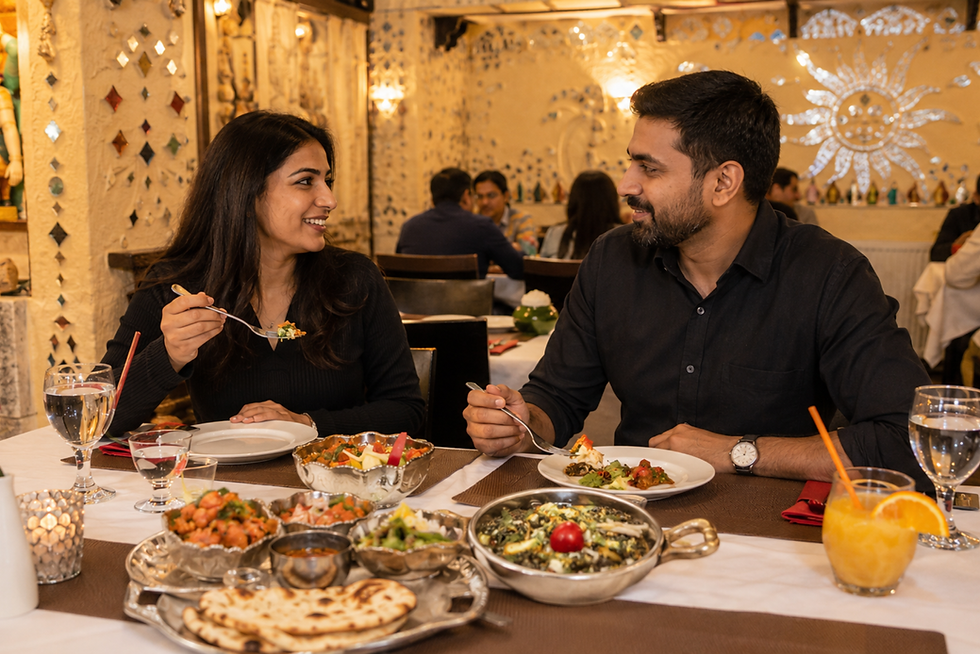
There was a time when "fine dining" and "plant-based" felt like two separate worlds that rarely met. That has changed. Plant-based fine dining in Edinburgh is now one of the city's most exciting culinary experiences, built on creativity, genuine skill, and beautifully composed vegetarian and vegan dishes. Meat-free food is no longer an afterthought or a single option added for one guest at the table. It has become the centre of the meal, shaped around seasonal ingredients, precision, and real craftsmanship.
This guide looks at what makes plant-based fine dining in Edinburgh worth seeking out: how chefs build flavour without meat or dairy, what to expect from tasting-style menus, pricing, dress codes, allergy accommodation, and why Kalpna has been a favourite for special occasions for decades.
What Makes Plant-Based Fine Dining Special?
Fine dining, at its heart, is about intention. Every ingredient is chosen for a reason, every technique is applied with purpose, and the whole experience is built around far more than simply being fed. Plant-based fine dining takes that same philosophy and applies it entirely to vegetables, legumes, grains, and plant proteins, which forces a different kind of creativity.
Without meat or dairy to lean on for richness or umami, a plant-based kitchen has to build depth another way: layering spices, reducing sauces properly, working with fermentation, and paying close attention to texture. That constraint tends to push for more creativity, not less, because flavour has to be built from the ground up rather than borrowed from a naturally rich protein.
Indian vegetarian cooking has a real head start here. It is a tradition that has spent centuries perfecting how to create depth and complexity entirely through spice, technique, and plants. This is exactly the approach behind Kalpna, a long-established vegetarian Indian restaurant in Edinburgh that has been part of the city's dining scene since 1975, where meat-free cooking has always been treated with the same seriousness and craft as any other high-end cuisine.
Are Vegan Tasting Menus Available in Edinburgh?
A well-run plant-based kitchen is usually well placed to put together a tasting-style experience: a curated run of smaller dishes that shows off a range of techniques and flavours across a meal, rather than committing to one or two large plates. That format suits Indian vegetarian cooking especially well, since a spread of smaller, distinct dishes has always been part of the tradition.
If you want a more curated, multi-course experience for a special occasion, it is worth reaching out directly to talk it through. Many kitchens are happy to build a bespoke sequence of dishes for anniversaries, celebrations, and events when given a little notice, drawing on a wider range than what appears on a standard evening menu. Our events and private dining options are a good place to start if this is the kind of evening you have in mind.
How Do Chefs Plate Plant-Based Dishes Beautifully?
Plating plant-based food well comes down to a few principles that separate a thoughtfully composed dish from a plain bowl of curry and rice.
Colour and contrast. Vegetables offer a wide natural colour range, and a good kitchen uses it deliberately, setting the deep red of a tomato-based curry against bright green coriander, or golden turmeric rice against a dark lentil dal.
Texture layering. Good plating is not only visual. A crisp element, like a papadum shard or fried onion, next to something soft and creamy, like a well-reduced dal, makes for a far more engaging bite than a single uniform texture.
Height and structure. Rather than spooning food flat onto a plate, thoughtful plating builds upward: rice or a purée as a base, the main component layered on top, and a garnish to finish as a final point of interest.
Sauce placement. A carefully placed swipe or pool of sauce, instead of a dish drowned in gravy, lets you decide how much you take with each bite and makes the plate look considered rather than accidental.
Restraint. Some of the best plant-based plates are not the most elaborate. Knowing when to hold back, letting three or four well-executed elements shine instead of crowding the plate, is often what separates genuinely elegant plating from something that just looks busy.
Are There Wine Pairings for Vegan Meals?
Pairing wine with plant-based food follows the same fundamentals as any other cuisine: matching intensity, balancing acidity, and thinking about how spice interacts with tannin and sweetness. A few pairings that tend to work well with Indian vegetarian dishes:
Off-dry whites – A wine with a touch of natural sweetness, such as a Riesling, balances spicier dishes and cools the palate between bites.
Light, fruity reds – A lighter red with soft tannins sits better with spiced vegetable and lentil dishes than a heavy, tannic red, which can clash with strong spice.
Sparkling wine – A good match for fried starters or richer, creamier dishes, since the acidity and bubbles cut through the richness.
Aromatic whites – A Gewürztraminer and similar aromatic wines complement dishes built around cardamom, cinnamon, or saffron.
Most wines used in pairings are naturally vegan, though some are traditionally fined using animal-derived products during production. If you are strictly vegan and want to be sure, it is worth asking whether a particular wine has been vegan-fined, as this is not always clear from the label. If you want guidance, most restaurants with a considered wine list are happy to suggest pairings based on what you are ordering, which matters most on an evening you want to feel considered from start to finish.
What's the Dress Code?
Dress codes for fine dining vary a fair amount depending on a restaurant's style and setting. Plant-based fine dining is no stricter or more relaxed by default; it comes down to the individual restaurant's atmosphere. As a general guide:
Smart casual is the most common expectation, covering tailored trousers, a smart shirt or blouse, and appropriate footwear, without necessarily requiring a full suit or formal dress.
Special occasions naturally lend themselves to dressing up a little, even without an enforced policy, simply because of the nature of the evening.
Checking ahead is always the safest approach if you are unsure, since expectations differ between a relaxed evening meal and a more formal event booking.
If you are planning something special and want to know what suits the setting, it is always worth asking when you book.
Can You Accommodate Allergies at This Level?
Yes, and a well-run plant-based kitchen is often particularly good at it, since navigating dietary requirements is already built into how a vegetarian and vegan menu is designed. That said, allergy accommodation at this level needs the same clear communication as anywhere else. A few things worth doing:
Mention allergies when booking, particularly for group bookings or curated menus, so the kitchen can plan properly rather than adapt on the spot.
Be specific, since a term like "nut allergy" can cover a wide range of triggers and severity, and clear detail helps the kitchen respond accurately.
Confirm again on arrival, especially for a bespoke tasting-style meal, as a quick word with your server at the table adds an extra layer of reassurance.
Ask about cross-contamination protocols if you have a severe allergy, which is relevant in any kitchen preparing several dishes at once.
Because our menu has been fully vegetarian since 1975, certain allergen risks around meat and fish cross-contact simply do not apply the way they would in a mixed kitchen, though nuts, dairy, and gluten still need the same careful attention as anywhere else.
Why Indian Vegetarian Cuisine Suits Fine Dining So Well
There is a reason Indian vegetarian cooking translates so naturally into a fine dining setting. It has never needed meat to feel complete. It is built instead on centuries of expertise in layering spice, balancing richness, and creating genuinely complex flavour through plants, lentils, and dairy alternatives.
That is part of why a considered, thoughtfully composed meal feels so different from a quick weeknight curry. A well-reduced dal makhani or a properly spiced vegetable curry carries the same depth and technical skill as any classical fine dining sauce, simply reached through a different set of techniques. As appetite for plant-based eating in Scotland keeps growing, more diners are actively choosing vegetarian and vegan experiences for special occasions rather than treating them as a compromise. A meal built entirely around thoughtfully composed vegetarian dishes is every bit as suited to an anniversary or celebration as a traditional meat-focused tasting menu.
Planning a Special Plant-Based Dining Experience
If you are thinking of booking a plant-based fine dining experience for a birthday, anniversary, or other celebration, a few things help the evening run smoothly:
Book in advance, especially for larger groups or if you are hoping to arrange something more bespoke than the standard menu.
Mention the occasion, since telling the restaurant you are celebrating often means small touches can be arranged ahead of time.
Ask about pairing options, whether wine, tea, or a non-alcoholic pairing, if you want the experience to feel considered course by course.
Discuss dietary needs early, giving the kitchen time to plan a menu that works for everyone at the table.
Set aside time. A proper fine dining experience is not meant to be rushed, so a relaxed evening beats squeezing it between other plans.
Frequently Asked Questions
Q. What makes plant-based fine dining special?
A. It applies the same precision, seasonality, and craftsmanship found in traditional fine dining entirely to plant-based ingredients, often requiring more creativity to build depth and richness without meat or dairy.
Q. Are vegan tasting menus available in Edinburgh?
A. Many plant-based restaurants can arrange a curated, multi-course experience, particularly for special occasions, when given advance notice to plan a bespoke sequence of dishes.
Q. How do chefs plate plant-based dishes beautifully?
A. Through deliberate colour contrast, texture layering, height, careful sauce placement, and restraint, letting a handful of well-executed elements stand out rather than overcrowding the plate.
Q. What's the dress code?
A. Most fine dining settings expect smart casual attire, though it is always worth checking directly with the restaurant, especially for a special occasion booking.
Q. Are there wine pairings for vegan meals?
A. Yes. Wine pairing follows the same principles as any cuisine, with off-dry whites, lighter reds, and aromatic whites often complementing spiced vegetarian dishes particularly well.
Q. How much does fine dining cost?
A. Pricing varies widely, typically ranging from around £25 for an à la carte meal to £45 or more per person for a curated tasting-style experience, with wine pairings usually added separately.
Q. Can you accommodate allergies at this level?
A. Yes, particularly at a dedicated vegetarian or vegan restaurant, though it is important to mention specific allergies in advance so the kitchen has time to plan accordingly.
Q. Is Kalpna suitable for a special occasion dinner?
A. Yes. Kalpna has hosted anniversaries, celebrations, and special occasions for decades, with a thoughtfully composed vegetarian and vegan menu suited to memorable evenings.
Final Thoughts
Plant-based fine dining has moved well beyond being a niche accommodation on someone else's menu. It is a genuine category built on the same craftsmanship, intention, and creativity as any other high-end dining experience, and Indian vegetarian cuisine, with centuries of expertise in building flavour through plants and spice, is especially well suited to it.
If you are planning a special evening in Edinburgh and want a plant-based experience that feels considered from start to finish, Kalpna has been perfecting this craft since 1975. Explore our Indian vegetarian menu or book a table to experience what thoughtfully composed plant-based dining really looks like.


Comments