
Autumn Warming Curries: 8 Vegetarian Indian Dishes for Edinburgh's Cold Season


There is a moment every autumn in Edinburgh when the weather crosses a line. One evening you leave the house without a jacket. The next, your hands are cold before you have made it to the bus stop. Once that shift happens, the food you want changes with it. Salads and light plates lose their appeal, and slow cooking, warm spices and generous portions start to feel less like indulgence and more like a genuine need. Here are eight warming Indian curries for Edinburgh's cold season.
Indian vegetarian cooking is built for this shift. Curries that have been slow-cooked over hours, dals that improve as they sit, coconut based southern dishes that lift the whole room, all of these come into their own once the season turns. This is a proper look at eight vegetarian Indian dishes that suit Edinburgh's cold season particularly well, and where to find them in the city.
Why Warm Food Matters in Autumn
Cold weather changes appetite. The body genuinely does want denser, richer food when the temperature drops, and there is real comfort in food that has taken hours to cook. Warm spices like cinnamon, cardamom, cumin and cloves also play a small role in how a meal feels. They do not need to be blisteringly hot to bring warmth. The best autumn dishes are usually gently spiced rather than aggressively so.
That is one of the reasons Indian food translates so well to a cold-weather rotation. The tradition has spent centuries refining how to build slow, layered flavour with plant ingredients. When you eat a proper autumn Indian dinner, the warmth stays with you well after you leave the restaurant.
What Makes a Curry "Warming"
Not every curry qualifies. A light salad-topped street-style bite might be authentic Indian food, but it is not what you want in mid-November. A warming curry tends to share a few traits.
Slow-cooked base, giving depth rather than surface heat
A rich or creamy body that carries flavour through every bite
Spices that lean toward warmth rather than sharp heat
Textures that reward eating slowly
Pairings that work well with bread or rice, which help extend the warmth
The dishes below all meet that bar in different ways. Some are classic North Indian anchors, others are lighter southern regional dishes that bring a different kind of warmth to the table.
1. Kalpna Dal Makhani
Dal makhani is the anchor of any autumn Indian menu, and for good reason. Black lentils cooked slowly enough that they surrender their structure, finished with butter, cream and gentle spice. Rushed versions of the dish taste flat. Properly cooked ones are dense, glossy and comforting.
At Kalpna, the dal makhani is slow-cooked in the traditional way. Order it as a shared centrepiece for the table, pair it with a garlic naan and let it anchor the rest of the meal. It is one of the dishes you can eat regularly through the cold season without ever getting tired of it.
Available at any properly established vegetarian Indian restaurant in Edinburgh, this is the dish that most people who grew up on Punjabi home cooking associate with home and hearth.
2. Butter Paneer
If dal makhani is the anchor, butter paneer is the crowd-pleaser. Fresh homemade paneer in a velvety tomato and butter sauce, delicately spiced and finished with cream. It is not the most adventurous dish on any menu, but it is one of the most consistently loved, particularly on colder nights.
The trick is proper paneer. Firm enough to hold its shape without falling apart, soft enough to absorb the sauce. A restaurant that makes its own paneer will always outperform one that buys it in. When it is done well, this is the dish you finish scraping from the bowl with the last piece of naan.
3. Saam Savera
Saam savera is less commonly seen on UK Indian menus, which is a shame because it is one of the more rewarding vegetarian dishes when the weather turns. A spinach and paneer roulade served in a rich Mughlai style gravy, it manages to be visually impressive and genuinely comforting at the same time.
The dish walks the line between elegant and hearty. It rewards being ordered as one dish on a shared table rather than as your single main, and it pairs particularly well with plain naan or butter tandoori roti. If you want something that feels a little different without wandering too far from the familiar, this is the dish to try.
4. Khubani Kofta
Khubani Kofta brings apricot into the centre of the plate. Apricot kofta with caramelised onion and cashew gravy and a subtle date sweetness. It is a slower, more complex dish than a standard kofta preparation, and it fits autumn evenings particularly well.
The layered sweetness sits alongside the warmth of the spices without overpowering them. Each bite carries a slight fruit lift against a background that feels rich but not heavy. Serve it with warm bread and rice, and you have a properly considered autumn main course.
5. Ananas Moilee
Not every warming curry needs to be heavy. Ananas Moilee is a South Indian coastal dish that brings a completely different kind of warmth to the table. Pineapple in a coconut milk base with ginger and curry leaves.
The dish shows how coconut cooking works when it is done with care. Bright, slightly sweet, aromatic, and utterly different from the North Indian curries that dominate most UK menus. On a wet Edinburgh evening, this is the dish that lifts the table when the room feels heavy from the rain outside. It pairs best with basmati or coconut rice.
Anyone browsing the full vegetarian menu will find several southern options that follow this style, and they are worth exploring alongside the more familiar Punjabi dishes.
6. Kumbh Coconut Curry
Mushroom curries are having a proper moment across UK menus, and the Kumbh Coconut Curry is one of the better vegan versions in the city. Sautéed mushrooms slow-cooked in fresh coconut milk and house masala, with ginger, garlic and warm spices.
Autumn mushrooms carry a particular depth that suits slower cooking. Combined with coconut milk, they create a curry that is both rich and clean tasting, without any of the heaviness that some cream-based dishes fall into. It is one of the best fully vegan warming dishes on any Indian menu in Edinburgh, and it deserves a spot on any cold-weather ordering rotation.
7. Punjabi Chole
Chana masala, or Punjabi Chole, might be the most everyday comfort food in Indian cooking. Tender chickpeas cooked in a fragrant Punjabi spiced tomato masala. It is the sort of dish you eat at home on a weeknight, and it translates beautifully to autumn restaurant dining.
The flavour builds through slow cooking, not sharp heat. It sits well alongside dal, breads and rice, and it is one of the more affordable mains on a typical Indian menu. If you are eating out regularly through the cold season, adding chole to your rotation gives you a proper full flavour without emptying your wallet.
It is also naturally vegan, which makes it a reliable choice for mixed dietary groups. A vegan option on the menu that does not feel like a compromise is genuinely valuable through autumn, when many restaurants lean heavily on dairy.
8. Baingan Bharta
Baingan Bharta is smoked tandoori aubergine, spiced with onion, tomato and house achari masala. The smoky base gives the dish an unusual depth that people often find surprising the first time they try it.
Aubergine is one of the more forgiving autumn vegetables, and when it is smoked over an open flame before being cooked into a curry, the whole dish takes on a warmth that few other vegetarian dishes match. It is also vegan by default, which makes it one of the most flexible warming curries for group dining. Pair it with tandoori roti and dal for a properly rustic autumn meal.
Building an Autumn Rotation
Eight dishes are enough to build a proper cold-season rotation. Rather than ordering the same curry every visit, alternate across the list.
A workable pattern:
Week one: Kalpna Dal Makhani and Butter Paneer
Week two: Saam Savera and Ananas Moilee
Week three: Khubani Kofta and Kumbh Coconut Curry
Week four: Punjabi Chole and Baingan Bharta
Add breads, rice and a shared dessert to each visit, and you have a month of autumn dining without repeating a single main. It also gives you a better sense of the menu's range, which is easier to appreciate over several visits than in a single tasting.
Pairings That Extend the Warmth
The curries alone do a lot of the work, but a few pairings genuinely lift the meal.
Breads
Garlic naan for creamier curries like butter paneer and dal makhani
Plain tandoori roti for lighter southern curries
Butter naan for evenings where you want to lean into richness
Peshawari naan for the sweeter side of the meal, with kofta or halwa
Rice
Basmati for most curries
Coconut rice for southern coconut based dishes
Pulao rice for kofta and Mughlai style curries
Sides
Boondi raita to balance heat
Papad and chutneys to open the meal
Pickles for an extra tang alongside heavier mains
Small choices, but they shape how the meal actually feels on a cold night.
Timing Autumn Dining
Autumn evenings in Edinburgh get dark early. That changes how a dinner out feels. What might have been a rushed weeknight meal in July becomes something slower and more considered by mid-October.
Weekday lunches, particularly the buffet at Kalpna between 12:00 and 2:30 pm, are one of the better value warming meals in the area
Early evening bookings, around 6:00 to 7:00 pm, give you the quietest rooms
Weekend dinners fill up quickly from mid-October as locals reclaim their favourite tables
Booking a week or two in advance covers most peak evenings comfortably
For an evening meal at a family-run restaurant in the Southside, the walk in from the city centre is short enough to feel manageable even on a cold evening, and the neighbourhood itself lends warmth to the visit.
Ordering for Two
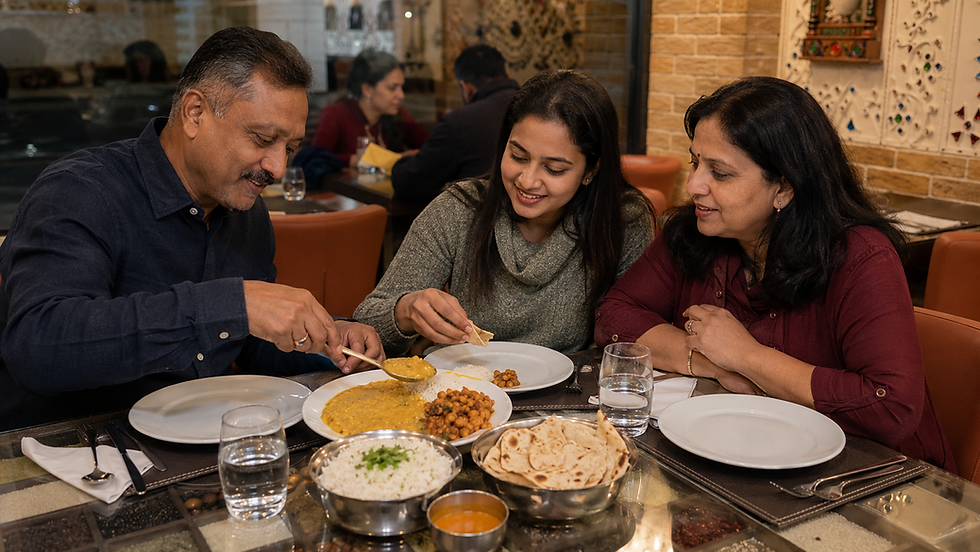
Two people can cover a proper autumn spread without over-ordering. A workable order:
One shared starter, ideally something warm like a kebab or samosa
One rich centrepiece, such as Dal Makhani or Butter Paneer
One lighter dish, such as Ananas Moilee or Kumbh Coconut Curry
One bread each and a shared rice
A shared dessert, such as Gulab Jamun or Coconut Halwa
Add tea or lassi to open the meal, and finish with masala chai. The pacing gives you a proper hour and a half at the table, which is exactly what autumn dining should feel like.
Ordering for a Group
For larger tables, the same principles apply on a bigger scale. Three or four curries covering different bases, generous breads and rice, and a couple of shared desserts. A thali also works well for groups where different people want different things.
Group meals during autumn tend to be more successful when nobody is rushing. Book a table with proper time built in, order across the menu rather than doubling up on similar dishes, and let the meal settle into its own pace.
Planning Your Visit
Autumn is one of the better seasons to eat out in Edinburgh. The summer crowds have thinned, the pace of the city has slowed, and restaurants that were packed in August have room to do the small things well again.
If you would like to plan a properly warm autumn meal, you can book a table at Kalpna in advance. Let the team know if you have any dietary needs, if you are marking a specific evening, or if you would like a quieter corner table on a cold night.
Small Habits That Improve Autumn Dining
A few practical notes for anyone eating out through the cold season:
Arrive fifteen minutes early to warm up before the food comes
Order a warm drink as soon as you sit down
Pace the meal, and do not order everything at once
Save room for dessert, since warm sweets are one of the pleasures of the season
Walk part of the way home if the weather allows, giving the meal time to settle
Autumn dining is not meant to be rushed. Slow it down, choose the dishes that suit the weather, and eat somewhere warm enough to make the whole evening feel considered.
FAQs
Q: What is the best warming Indian curry for cold weather?
A: Kalpna Dal Makhani, Butter Paneer and Baingan Bharta are all excellent slow-cooked options that suit cold weather. Coconut based curries like Ananas Moilee bring a different kind of warmth if you want something lighter.
Q: Are there vegan warming curries on Indian menus?
A: Yes. Punjabi Chole, Baingan Bharta, Kumbh Coconut Curry and Ananas Moilee are all naturally vegan and work well as autumn comfort food. Purely vegetarian restaurants typically mark vegan items clearly.
Q: What is Saam Savera and is it worth trying?
A: Saam Savera is a spinach and paneer roulade in a rich Mughlai style gravy. It is a slightly more refined dish than a standard curry and is well worth trying if you want something a little different from the familiar options.
Q: What breads pair best with autumn curries?
A: Garlic naan works well with creamier curries like butter paneer and dal makhani. Plain tandoori roti suits lighter southern dishes. Peshawari naan pairs nicely with kofta and richer preparations.
Q: Where can I find these dishes in Edinburgh?
A: Kalpna Restaurant at 2 to 3 St Patrick Square in Newington serves all of the dishes discussed in this guide as part of its regular menu. It has been running as a purely vegetarian Indian restaurant since 1975.
Q: Do I need to book ahead for autumn dining?
A: Booking is recommended, particularly for weekend evenings and during festival periods. Autumn brings locals back to their favourite tables, and independent restaurants fill more quickly than people expect through the season.


Comments