
What to Order at an Indian Restaurant: A Vegetarian First-Timer's Guide

Updated: 4 hours ago

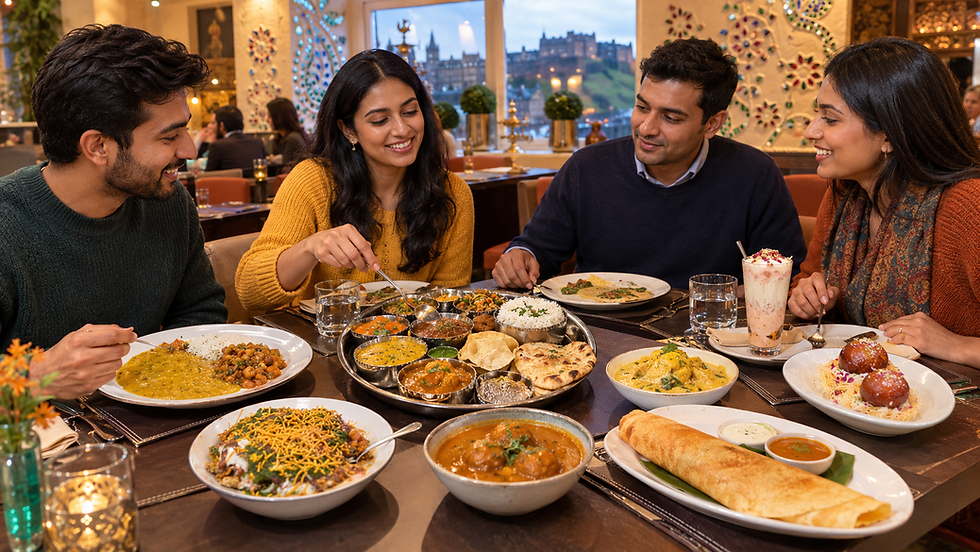
Walking into an Indian restaurant for the first time can feel a little overwhelming. The menu is long, the names are unfamiliar, and half the dishes seem to come with a story attached. If you have found yourself staring at a menu wondering where to even begin, you are far from alone. Most people who now happily order dosas and thalis started off just as confused. This guide explains what to order at an Indian restaurant if you're new to vegetarian Indian food.
This guide is for anyone new to Indian food, especially those looking for vegetarian options. It walks through what to order at an Indian restaurant without the guesswork, from the first papad on the table to the last spoonful of kulfi. No jargon, no pressure, just a friendly nudge in the right direction.
Why Indian Vegetarian Food Deserves a Closer Look
India has one of the world's largest vegetarian populations, and its cooking reflects that. Vegetables, lentils, grains and dairy carry the same weight in Indian kitchens that meat and fish do elsewhere. That means vegetarian dishes are not afterthoughts. They are the main event.
Regional variety is another thing worth understanding early on. What you eat in Punjab is not what you eat in Kerala, and Gujarati home cooking looks nothing like what you find in Chennai. A good vegetarian Indian restaurant in Edinburgh will usually pull from several traditions, giving you a fuller picture of what the cuisine actually offers.
Start With the Basics: How an Indian Meal Is Structured
Before ordering, it helps to understand the shape of a typical Indian meal. Most restaurants organise their menu into a few sections that build on each other.
Starters or snacks, small plates to share
Mains, usually curries or specialised dishes
Breads and rice, the base of the meal
Sides, chutneys, raitas and pickles
Desserts and drinks
You do not need to order from every section, but understanding the flow makes it easier to plan. If you are dining with a group, ordering across categories and sharing is the way most Indian families eat at home.
The First Thing on the Table: Papad and Chutneys
Almost every Indian meal starts with papad, a thin crisp cracker made from lentil or chickpea flour. It arrives with small bowls of chutney, usually mint, tamarind or mango, and it is meant to wake up the palate before the food arrives.
Do not be shy about breaking off pieces and dipping them. This is not a fussy tradition, it is a practical one. Papad gives you a chance to work out how you handle heat, sweetness and tang before you commit to a main course.
Starters: Where to Begin
Vegetarian Indian starters are one of the most enjoyable parts of the menu. They tend to be well-portioned, easy to share, and packed with distinct flavours.
Familiar Choices for Beginners
Samosa, a fried pastry filled with spiced potato and peas
Onion bhaji, thinly sliced onions fried in gram flour batter
Vegetable pakora, a mix of vegetables coated and fried until crisp
These three tend to feel the most approachable if you are used to Western food. They also happen to be classic pub and takeaway staples across the UK, so you will probably recognise them.
Something a Little More Adventurous
Hara bhara kebab, a green patty made from spinach, peas and paneer
Dahi kebab, a soft yoghurt-based kebab with sweet spice notes
Chukandari ki tikki, a beetroot patty with tangy chutneys and nuts
If you want to try something less familiar without straying too far, these are good bridge dishes. They still fry or grill nicely, but they introduce ingredients like paneer and yoghurt-based binding that appear elsewhere on the menu.
Chaat and Street Food Style Starters
Chaat is a whole category on its own. It refers to snacky, tangy, layered dishes that Indian street vendors have been perfecting for generations. Dahi poori chaat, vada pav and papad basket all fall under this umbrella. If you enjoy contrast, sweet, sour, spicy and crunchy all in one bite, chaat is worth ordering.
Understanding Curries Without Getting Lost
The word curry does not exist in most Indian languages the way English uses it. What we call curry is actually a huge family of dishes with different sauces, textures and cooking techniques. Here is a simple way to think about them.
By Base
Tomato and cream based, richer and slightly sweet, good for beginners
Yoghurt based, tangier and lighter, often used in North Indian cooking
Coconut milk based, common in South Indian dishes, mild and mellow
Lentil based, hearty and protein-rich, the everyday food of India
By Heat
Spice levels in restaurants can usually be adjusted. If you are new to Indian food, ask for mild or medium first. Heat is easy to add and impossible to remove. A good server will happily guide you.
Vegetarian Curries Worth Trying
You could spend a lifetime working through Indian vegetarian curries. To keep things simple, here are five that give you a wide sense of the cuisine.
Paneer Dishes
Paneer is fresh Indian cheese, firm enough to hold its shape when cooked. It works beautifully in curries. Palak paneer, cooked in a spinach base, is one of the most-loved starting points. Shahi paneer, in a rich tomato and cashew sauce, is another crowd pleaser.
Dal
Dal is simply lentil stew, and it is the true backbone of Indian cooking. Dal makhani, slow-cooked black lentils finished with butter and cream, is comforting and mild. Tarka dal, tempered with cumin and garlic, is lighter but full of flavour.
Chana Masala
This is a chickpea curry with a tangy, slightly deep flavour from spices like amchur and coriander. It pairs perfectly with bread and is often the dish that converts sceptics.
Kofta
Kofta are vegetable balls served in a spiced sauce. Malai kofta, floating in a creamy tomato base, is one of the most decadent vegetarian dishes on any Indian menu.
South Indian Options
If you are curious about South Indian food, look for dishes like ananas moilee, made with pineapple and coconut milk. These curries tend to be lighter than their northern cousins and lean on curry leaves, mustard seeds and coconut.
Do Not Skip the Bread
Indian breads are not just an accompaniment. They are part of the eating experience. You use them to scoop, wrap and mop up sauce.
Naan, the soft leavened bread most people know
Roti or chapati, unleavened and lighter than naan
Paratha, layered and flaky, sometimes stuffed
Puri, deep fried and puffy, often eaten with lighter curries
Kulcha, stuffed with fillings like paneer or potato
If you have never tried it, order a garlic naan alongside a curry. It is one of those simple pairings that just works.
What to Do About Rice
Rice usually appears in a few forms on Indian menus. Steamed basmati is the most common, its long grains and light aroma pairing with almost anything. Jeera rice, tempered with cumin, adds gentle warmth. Biryani, a layered rice dish cooked with spices and vegetables, is closer to a main course than a side. If you order biryani, you probably will not need another main.
For a vegetarian first timer, edamame biryani or vegetable biryani gives you a full sense of the dish without needing much else.
The Thali: An Easy Way to Try Everything
If choosing feels stressful, the thali solves that problem in one order. A traditional Indian thali is a platter with several small portions arranged together, usually including a starter, two or three curries, dal, rice, bread and dessert.
Thalis exist because Indian food is meant to be enjoyed in variety, not in single big plates. Ordering one lets you sample multiple things without committing to a full portion of each. For anyone still learning what they like, this is the most efficient way to explore. Vegan versions are widely available too, which makes it a good pick for vegan Indian dining in Edinburgh or anywhere else you happen to be.
Sides Worth Ordering
Small extras can transform a meal. A few worth adding to your order:
Raita, a cooling yoghurt dip with cucumber, tomato or mint
Kachumber salad, chopped raw vegetables with lemon and salt
Pickle, small but powerful, use sparingly
Extra chutneys, especially if you enjoyed the ones with your papad
Raita in particular is a lifesaver if a dish turns out spicier than you expected. Dairy calms the heat far better than water does.
How to Handle Spice Without Regret
The fear of ordering something too hot puts a lot of first timers off Indian food entirely. Here are a few practical tips.
Start with mild or medium and adjust upward next time
Have raita or lassi on hand, both cut heat effectively
Water actually spreads the burn, dairy neutralises it
Bread and rice both soften the impact of spice
If a dish is too hot, ask for extra sauce, cream or yoghurt to be added
Restaurants are used to these questions. Asking is the sensible thing to do.
Drinks to Pair With the Meal
Traditional Indian drinks pair well with the food. Mango lassi, a sweet yoghurt drink, is popular for good reason. Salted lassi is less sweet and refreshing. Masala chai, spiced tea, comes at the end of the meal or between courses.
For non-Indian drinks, both wine and beer work. Crisp lager cuts through richer curries. Off-dry whites and light reds handle most Indian food comfortably. If you are eating at a family-run Indian restaurant with a proper wine list, the staff can usually recommend something specific to what you have ordered.
Save Room for Dessert
Indian desserts are unlike Western ones. They tend to be milk based, gently spiced with cardamom, saffron or rose, and often served warm.
Gulab jamun, soft milk dumplings soaked in warm syrup
Kulfi, dense Indian ice cream in flavours like pistachio and mango
Rice kheer, slow-cooked rice pudding with saffron
Coconut halwa, a fudgy set sweet with almonds
If you have never tried Indian sweets, gulab jamun is the safest bet. Warm, sweet and comforting, it wins over almost everyone.
A Few Practical Ordering Tips
Some final ideas that make your first Indian meal go smoothly.
Order fewer dishes than you think you need, portions are usually generous
Mix textures, one dry dish, one with sauce, one starter, one side
Do not order two similar curries, the flavours will blur
Share dishes across the table, that is how the food is meant to be eaten
Tell the server it is your first time, most staff love recommending
If you would like to plan a visit, you can book a table at Kalpna and let them know it is your first time. A little heads-up goes a long way.
Making the Experience Your Own
Indian food rewards curiosity. Once you have found a few dishes you like, keep going. Try a South Indian dosa next time. Explore Gujarati thalis. Ask about regional specials that do not appear on the standard menu. The cuisine is deep enough that you can eat vegetarian Indian food for years and still find something new.
The best approach on a first visit is to relax, ask questions and share plates with whoever you came with. You do not need to master the menu on day one. You just need to enjoy the meal.
FAQs
Q: What should I order at an Indian restaurant if I do not like spicy food?
A: Look for dishes with cream, coconut milk or yoghurt bases. Palak paneer, malai kofta, dal makhani and coconut based South Indian curries are all mild. Ask the kitchen to keep the spice level low, most restaurants are happy to adjust.
Q: Is Indian food usually vegetarian friendly?
A: Yes. Vegetarian cooking is central to Indian cuisine, and many restaurants offer extensive vegetarian sections. Fully vegetarian Indian restaurants also exist and are worth seeking out if you want the widest choice.
Q: What is the difference between naan and roti?
A: Naan is a leavened bread cooked in a tandoor oven, soft and slightly chewy. Roti is unleavened, thinner and lighter. Naan is richer, roti is closer to an everyday bread.
Q: What is a thali and should I order one?
A: A thali is a platter with small portions of several dishes, usually including curries, dal, rice, bread and dessert. It is a good option for first timers because it lets you try multiple things without ordering separate mains.
Q: How do I know what is vegan on an Indian menu?
A: Ask about ghee, paneer, yoghurt and cream. Many South Indian and Gujarati dishes are naturally vegan, and most restaurants clearly mark vegan options or will confirm on request.
Q: Where can I try authentic vegetarian Indian food in Edinburgh?
A: Kalpna Restaurant in Newington has been serving vegetarian Indian food since 1975 and offers dishes from several regional traditions on one menu, making it a good starting point for beginners.


Comments