Indian Regional Vegetarian Cuisine: 8 Different Food Traditions to Discover

Updated: Oct 13

Ask most people outside India to describe Indian food and you will usually hear about butter chicken, naan and a generic idea of "curry." What rarely comes up is that India is not one cuisine at all, but dozens of distinct regional food cultures, each shaped by its own geography, climate, religion and history. Nowhere is this more obvious than in the country's vegetarian cooking, which ranges from the fermented rice batters of the south to the fruit-and-nut-laden gravies of Kashmir in the north. This guide introduces eight styles of Indian regional vegetarian cuisine and what makes each one different.
At Kalpna restaurant Edinburgh, our menu has drawn on several of these regional traditions since 1975, long before "regional Indian food" became a talking point in the UK food scene. This guide walks through eight distinct vegetarian food traditions from across India, what makes each one unique, and how they still shape the way Indian vegetarian food is cooked and served today.
1. Punjab: Rich, Buttery and Comforting
Punjabi food is probably the version of Indian cuisine most familiar to UK diners, largely because it dominates British-Indian restaurant menus. Rooted in the fertile plains of northern India, Punjabi vegetarian cooking leans on dairy, ghee and robust spicing. Dishes like dal makhani, simmered for hours with butter and cream, and paneer-based curries reflect a farming culture with abundant access to milk, wheat and legumes.
Tandoori cooking also originates here, giving Punjabi cuisine its characteristic charred, smoky flatbreads and grilled vegetables. It is hearty, warming food, built for cold winters and long working days in the fields, and it remains the foundation of our own Indian vegetarian menu Edinburgh guests order from most often.
2. Gujarat: The Art of Balanced Flavour
Gujarati cooking is built around a principle rarely found elsewhere: balancing sweet, sour, salty and spicy flavours within a single dish. Gujarat's large Jain and Vaishnav Hindu populations have followed strict vegetarian diets for centuries, and the cuisine developed as a fully independent culinary language rather than a meat-free adaptation of something else.
Steamed gram-flour dhokla, silky khandvi rolls and the slow-cooked mixed-vegetable dish undhiyu all showcase a lighter, more technical style of cooking than Punjabi food, relying on steaming and fermentation as much as frying. It is one of the clearest examples of how varied Indian vegetarian cuisine history really is.
3. Tamil Nadu and Kerala: The South Indian Staples
South India's vegetarian tradition centres on rice and fermented lentil batters, giving the world dosa, idli and vada. In Tamil Nadu, meals are often built around a thali-style spread with sambar, rasam and a rotating selection of vegetable dishes, while Kerala's cuisine leans on coconut, curry leaves and mustard seed tempering, giving its curries a distinctly different character from anything found further north.
The fermentation process behind dosa and idli batter is a genuine feat of food science, developed long before anyone understood the microbiology behind it, and it produces some of the most easily digestible grain dishes in Indian cooking. If you want to go deeper on how this technique works, our earlier piece on dosa Edinburgh covers the full process from batter to plate.
4. Rajasthan: Desert Ingenuity
Rajasthan's arid climate and limited access to fresh vegetables shaped one of India's most resourceful vegetarian cuisines. Cooks in the region turned to lentils, dried beans, buttermilk and preserved ingredients out of necessity, giving rise to dishes like dal baati churma, where hard wheat dumplings are baked over coals and served with spiced lentils and a sweet, crumbled wheat dessert.
Ker sangri, made from dried desert beans and berries, is another example of Rajasthani ingenuity, turning ingredients that survive harsh conditions into a flavourful, tangy dish. Rajasthani food tends to be spicier and more intensely flavoured than its neighbours, partly to compensate for a historically limited variety of fresh produce.
5. Bengal: Rice, Mustard and Sweets
Bengal's vegetarian cooking is often overlooked internationally, overshadowed by the region's famous fish dishes, but its vegetable-based cooking is just as distinctive. Mustard oil and panch phoron, a five-spice blend of fennel, fenugreek, cumin, mustard and nigella seeds, define much of Bengali vegetarian food, appearing in dishes like shukto, a lightly bitter mixed-vegetable stew, and various dal preparations finished with a sharp mustard-oil tempering.
Bengal is also responsible for some of India's most famous desserts, including rasgulla and sandesh, both built around fresh paneer-style cheese rather than the ghee-heavy sweets found elsewhere in the country.
6. Maharashtra: Coastal Meets Inland
Maharashtra's food culture splits roughly into two traditions: the coastal cuisine around Mumbai and Konkan, which uses coconut and kokum for tang, and the drier inland regions, where peanuts, sesame and dried spice blends like goda masala take over. Vegetarian staples include misal pav, a spiced sprouted-lentil curry served with bread, and varan bhaat, a simple lentil-and-rice dish that is Maharashtra's answer to comfort food.
Street food culture is particularly strong here, and Maharashtra has contributed heavily to the wider category of vegan Indian street food now popular well beyond India's borders.
7. Kashmir: Fruit, Nuts and Delicate Spicing
Kashmiri vegetarian cuisine, particularly the Pandit tradition, stands apart from the rest of India. Onion and garlic are traditionally avoided in many Kashmiri Pandit households, similar to Jain dietary practices, with asafoetida used to build savoury depth instead. Dishes lean on yoghurt-based gravies, dried fruit, saffron and warming spices like fennel and ginger powder, reflecting the region's cold mountain climate.
Dum aloo, potatoes slow-cooked in a yoghurt and fennel gravy, is one of the most recognisable Kashmiri vegetarian dishes, and its delicate, fragrant spicing is a world away from the heat-forward cooking found in much of the rest of the country.
8. Hyderabad and the Deccan: Layered Rice Traditions
The Deccan plateau, and Hyderabad in particular, is best known internationally for biryani, and while the dish is often associated with meat, the vegetarian version is just as celebrated locally. Vegetable biryani from this region layers basmati rice with a spiced vegetable mix, saffron and fried onions, then slow-cooks the whole pot under a sealed lid so the flavours steam together rather than simply mix.
This technique, known as dum cooking, produces a completely different texture and depth of flavour compared to simpler one-pot rice dishes. If biryani is new to you, our vegan biryani Edinburgh guide breaks down exactly how the dish is built, layer by layer.
What Ties These Regional Cuisines Together
Despite their differences, India's regional vegetarian traditions share a few common threads. Spices are treated as tools for both flavour and function, not just heat, which is part of why Indian spices health benefits remain such a rich topic on their own. Grains and pulses form the backbone of nearly every regional cuisine, adapted to whatever crops grow well in that particular climate. And in almost every region, food is deeply tied to religious and cultural practice, whether that means Jain restrictions on root vegetables, Gujarati Jain and Vaishnav influence, or Kashmiri Pandit avoidance of onion and garlic.
Understanding this variety changes how you order Indian food. Instead of defaulting to the same handful of dishes, you can start choosing based on region and technique, whether that means the fermented batters of the south, the dum-cooked rice of Hyderabad, or the balanced sweet-sour profile of Gujarat.
Why This Variety Matters for Vegetarian and Vegan Diners
For anyone following a vegetarian or vegan diet, India's regional traditions offer far more range than most people realise. Because so much of the country has followed vegetarian diets for centuries, whole regional cuisines were built from the ground up without meat, rather than adapted after the fact. That makes India one of the richest sources of genuinely plant-based cooking anywhere in the world, and a natural focus for anyone exploring plant based eating Scotland has to offer through its Indian restaurants.
Experience Regional Indian Vegetarian Cooking in Edinburgh
Kalpna has represented several of these regional traditions on one menu since 1975, drawing on Gujarati, Punjabi and South Indian techniques rather than sticking to a single regional style. As a long-running vegetarian restaurant in Edinburgh, we see it as part of our role to introduce guests to dishes and techniques they may not have encountered before, not just the handful of curries most familiar from British-Indian menus.
How to Start Exploring Regional Indian Vegetarian Food
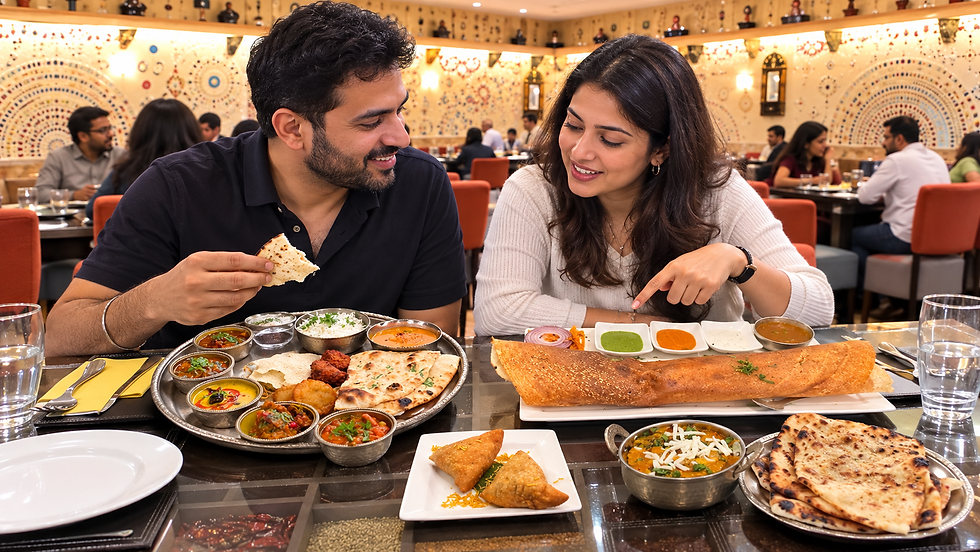
If eight regions feels like a lot to take in at once, a few simple habits make it easier to explore without feeling overwhelmed. Order by region rather than by dish name, and ask your server which part of India a particular item comes from. Try a thali when one is available, since it naturally samples several dishes at once. And pay attention to texture as much as flavour, since fermented South Indian batters, dum-cooked Hyderabadi rice and slow-simmered Punjabi dals each rely on completely different cooking techniques to get there.
Final Thoughts
India's regional vegetarian traditions are far too varied to sum up in a single dish or menu category. Each region developed its own techniques, spice logic and signature dishes in response to its own geography, religion and history, and together they make up one of the most sophisticated vegetarian food cultures in the world. The best way to understand that variety is simply to keep trying new dishes, one region at a time.
Ready to explore it for yourself? Book a table Edinburgh vegetarian diners trust, and let us guide you through the regional traditions that have shaped our menu since 1975.
Frequently Asked Questions
Q: Is all Indian food vegetarian?
A: No, but a significant portion of India's population follows vegetarian diets, and several regions, including Gujarat, developed entirely independent vegetarian culinary traditions rather than meat-free adaptations of other dishes.
Q: What is the difference between North and South Indian vegetarian food?
A: North Indian vegetarian cooking tends to rely more on wheat, dairy and richer gravies, while South Indian cuisine centres on rice, fermented lentil batters and lighter, tangier flavours built around coconut and tamarind.
Q: Which Indian region is known for the mildest vegetarian food?
A: Gujarati and Kashmiri Pandit cuisines are generally considered milder and more delicately spiced compared to the more intense flavours found in Rajasthani or Andhra cooking.
Q: Why do some Indian vegetarian dishes avoid onion and garlic?
A: This is most common in Jain cooking and some Kashmiri Pandit households, where root vegetables are avoided on religious or philosophical grounds, since harvesting them kills the entire plant.
Q: What is the best way to try multiple regional Indian cuisines in one visit?
A: A thali is usually the easiest option, since it brings together several small dishes on one plate, often representing more than one regional style in a single meal.
Q: Does Kalpna serve dishes from more than one Indian region?
A: Yes, Kalpna's menu has combined Gujarati, Punjabi and South Indian dishes since 1975, giving guests the chance to try several regional traditions without visiting more than one restaurant.
Ready to taste India's regional diversity for yourself? Visit Kalpna in Newington, a short walk from Edinburgh's Old Town, where vegetarian cooking from across India has been served since 1975. Book your table today or browse our full menu to plan your visit.


Comments