South Indian vs North Indian Vegetarian Food: What's the Difference?

Ask ten people to describe "Indian food" and you will likely get ten different answers, and that is exactly the point. India is not one single cuisine but a patchwork of regional food cultures, each shaped by its own climate, history, and local ingredients. Nowhere is this more obvious than when comparing South Indian and North Indian vegetarian cooking, two culinary traditions that, while both rooted in the same country, can feel worlds apart on the plate.
At Kalpna, a well-established vegetarian restaurant Edinburgh diners have trusted since 1975, our menu draws from across India's regional traditions, giving guests a chance to taste these differences for themselves. In this blog, we will break down exactly what separates South Indian and North Indian vegetarian food, from ingredients and cooking methods to texture, spice, and everyday eating habits.
Why the North-South Divide Exists
India's culinary regions were shaped largely by geography and climate. The north, with its wheat fields, dairy farming, and cooler winters, developed a cuisine built around bread, milk, and richer, slower-cooked dishes. The south, with its tropical climate, abundant rice paddies, and coastal access, leaned into rice, lentils, coconut, and lighter, faster cooking techniques.
These environmental differences did not just shape ingredients, they shaped entire food philosophies. Understanding this helps explain why a North Indian thali and a South Indian meal can look, taste, and feel so different, despite both falling under the same broad label of "Indian vegetarian food."
The Base: Wheat vs Rice
Perhaps the clearest distinction between the two regions comes down to a single staple.
In North India, wheat dominates. Rotis, parathas, naan, and puris form the backbone of most meals, often made fresh and served warm alongside curries and dals. In South India, rice takes centre stage. Whether steamed as plain rice, fermented into dosas and idlis, or ground into batters for various dishes, rice touches nearly every part of a South Indian meal.
This single difference in staple grain ripples out into almost everything else, texture, cooking time, and even how meals are structured throughout the day.
Curries and Gravies: Richness vs Lightness
North Indian vegetarian curries are often known for their richness. Dishes like dal makhani, paneer butter masala, and malai kofta rely on cream, butter, ghee, and slow-cooked onion-tomato bases, resulting in thick, indulgent gravies. Our dal makhani Edinburgh guests order regularly is a perfect example of this style, slow-simmered lentils enriched with butter and cream until deeply comforting.
South Indian curries, by contrast, tend to be lighter and tangier. Sambar, a lentil and vegetable stew flavoured with tamarind, and rasam, a thin, peppery soup, both rely on tang and spice rather than dairy richness to build flavour. Coconut also plays a far bigger role in southern gravies, appearing in both fresh and ground form to add body and a subtle sweetness.
Spice Profiles: Warmth vs Heat
Both regions use spice generously, but the character of that spice differs noticeably. North Indian cooking often builds flavour through warming spices, garam masala, cumin, coriander, and dried chillies, layered slowly during cooking to create depth. South Indian cooking frequently relies on tempering, known as "tadka" or "tempering," where mustard seeds, curry leaves, dried red chillies, and asafoetida are quickly fried in oil at the start or end of cooking, releasing a burst of aromatic flavour.
The result is that North Indian dishes often taste deep and layered, while South Indian dishes tend to taste bright, tangy, and immediate. Neither is more authentic than the other, they simply reflect different regional approaches to building flavour.
Iconic Dishes From Each Region
To really understand the difference, it helps to look at signature dishes from both sides.
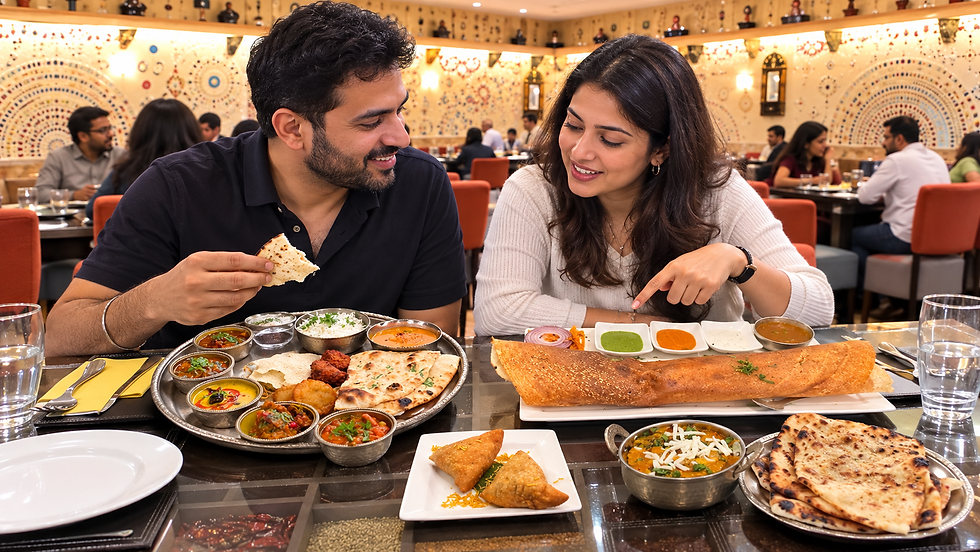
North Indian vegetarian classics include chana masala, a spiced chickpea curry served with rice or roti, palak paneer, soft paneer cubes in a smooth spinach gravy, and rajma, red kidney beans cooked in a thick tomato-based sauce. South Indian classics include dosa, a crisp, fermented rice and lentil crepe often served with chutney and sambar, idli, soft steamed rice cakes typically eaten for breakfast, and vegetable uttapam, a thicker, savoury pancake topped with onions and chillies.
For anyone wanting to explore the South Indian side of the menu more closely, our dosa Edinburgh options offer a genuine taste of this fermented rice tradition, crisp on the outside and soft within.
Meal Structure: Thali vs Everyday Rice Meals
The way meals are structured also differs between the two regions. A North Indian thali typically arrives as a compact platter, small bowls of dal, a vegetable curry, rice, roti, yoghurt, pickle, and dessert, offering a balanced sampling of flavours in one sitting. If you would like a deeper breakdown of how this format works, our detailed guide on what Indian thali really means explains its structure and significance in more depth.
South Indian meals, especially traditional ones served on a banana leaf, follow a different rhythm. Rice tends to be the constant, served repeatedly throughout the meal with different accompaniments, sambar first, then rasam, then yoghurt rice to finish, rather than everything being presented together at once.
Breakfast Culture: A Key Difference
One of the most noticeable contrasts between the two regions shows up at breakfast. North Indian breakfasts often include parathas stuffed with potato, paneer, or radish, served with yoghurt and pickle. South Indian breakfasts, on the other hand, are famous worldwide for dishes like idli, dosa, and upma, light, fermented, and easy to digest, ideal for the region's warmer climate.
This difference reflects a broader theme throughout the comparison: northern dishes tend to be heartier and more filling, while southern dishes often prioritise lightness and digestibility, particularly earlier in the day.
Common Ground: Shared Vegetarian Values
Despite their differences, North and South Indian vegetarian cuisines share a deep commitment to plant-based eating, something that predates the modern vegetarian movement by centuries. Lentils, vegetables, and dairy form the backbone of both traditions, and neither relies on meat to create satisfying, flavour-packed meals.
This shared vegetarian foundation is part of why India remains such a rich destination for plant-based food lovers, and why a vegetarian Indian restaurant Edinburgh menu drawing from both regions can offer such genuine variety without ever needing to include meat.
Which Style Is Healthier?
This is a common question, and the honest answer is that both regions offer healthy options, they simply take different approaches. South Indian food, with its emphasis on fermentation, rice, and lentils, is often praised for being lighter and easier to digest. North Indian food, while sometimes richer, offers excellent nutritional value too, particularly in dal-based and vegetable-forward dishes.
For a broader look at how vegetarian Indian cuisine supports overall wellbeing across both regional styles, our earlier article on the health benefits of vegetarian Indian food covers this in more detail.
Experiencing Both Styles at Kalpna
Since 1975, Kalpna has built its menu around celebrating India's regional diversity rather than sticking to a single style, making us an award winning restaurant Edinburgh diners visit specifically to explore both North and South Indian vegetarian cooking under one roof. Set in the heart of the city, our Edinburgh Old Town restaurant location makes us easy to reach whether you are exploring nearby streets or simply searching for restaurant near me Edinburgh on a night out.
To see the full range of dishes from both culinary traditions, take a look at our complete menu page. If you would like to know more about how Kalpna became one of Scotland's most established names in vegetarian Indian dining, our about page shares that story in full.
Planning a visit with a group or for a special occasion? Our events page covers everything from casual bookings to private dining. And if you have any questions before you visit, our contact page includes directions, phone details, and opening hours.
Frequently Asked Questions
Q: Is South Indian food generally spicier than North Indian food?
A: Not necessarily spicier in terms of heat, but South Indian food often has a sharper, tangier profile due to tamarind, curry leaves, and mustard seed tempering, while North Indian food tends to build a deeper, warmer spice base.
Q: Which region is better for vegans, North or South India?
A: Both offer strong vegan options, though South Indian cuisine often has a slight edge due to its heavier reliance on coconut and rice rather than dairy, making many dishes naturally dairy-free.
Q: Is dosa a North Indian or South Indian dish?
A: Dosa is a South Indian dish, made from a fermented rice and lentil batter, and it remains one of the most iconic examples of South Indian vegetarian cooking.
Q: Why is North Indian food often richer than South Indian food? A: North India's cooler climate and strong dairy farming tradition led to greater use of ghee, cream, and butter in cooking, resulting in richer, heartier dishes compared to the lighter, rice-based cooking common in the south.
Q: Can I try both North and South Indian vegetarian dishes at the same restaurant?
A: Yes, many Indian restaurants, particularly those with diverse menus, offer dishes from both regions, allowing guests to compare and enjoy the best of both culinary traditions in a single visit.
Final Thoughts
North and South Indian vegetarian cuisines may share a country and a deep commitment to plant-based eating, but they tell very different culinary stories. From wheat versus rice to richness versus lightness, each region offers its own take on what makes a truly satisfying vegetarian meal. Rather than choosing one over the other, the real joy lies in exploring both, and discovering just how vast and varied Indian vegetarian food truly is.

Comments