
Dosa in Edinburgh: Types, Ingredients & Health Benefits

Updated: Oct 13
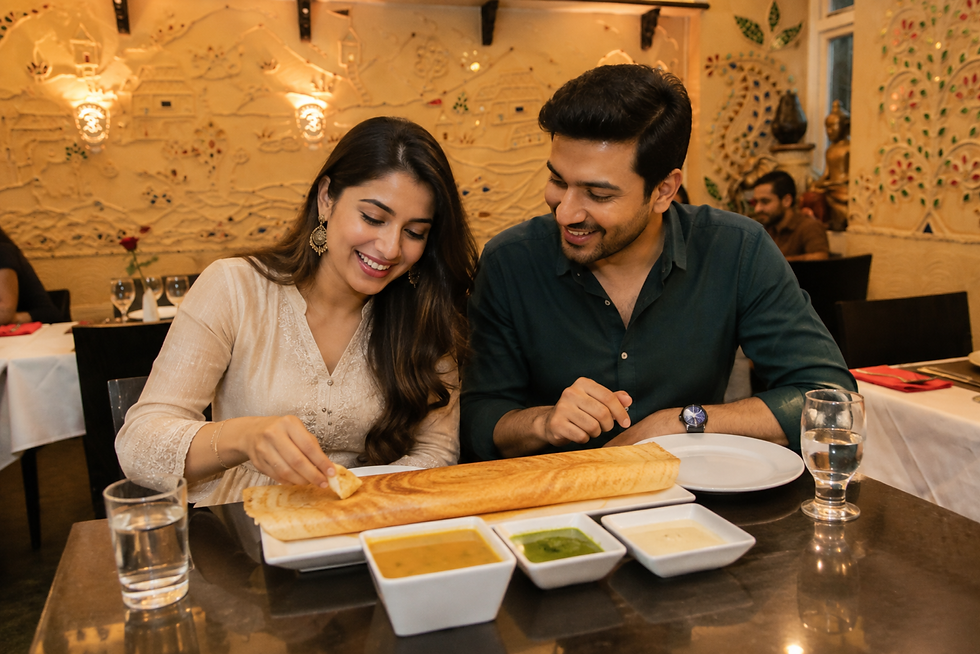
There's a reason dosa has become one of the most recognisable dishes on Indian menus across the world. It's the sound of batter hitting a hot griddle, the sight of a paper-thin crepe being folded and rolled, and that first satisfying crunch as you break into it. Yet for something so widely loved, a surprising number of people still aren't quite sure what it's made of, whether it's vegan, or how it differs from similar-looking dishes on the menu. This guide covers exactly that, from the basics of what a dosa is to the regional variations you're likely to come across. This guide covers the main types, what goes into the batter, and where to find dosa in Edinburgh.
Whether you're ordering one for the first time or you already have a favourite, this guide walks you through everything worth knowing, including how it's traditionally made, what to pair it with, and why it has held onto its place as one of South India's most beloved dishes for generations.
What Exactly Is a Dosa?
A dosa is a thin, crisp, savoury crepe made primarily from a fermented batter of rice and lentils. It originated in South India and has since become one of the most popular dishes across the entire country and, increasingly, across the world. Despite its simple ingredient list, a good dosa is deceptively hard to get exactly right, needing the correct fermentation, the right batter consistency, and a well-seasoned griddle to achieve that signature crisp, golden exterior with a soft interior.
Dosas are usually served with a small selection of accompaniments, most commonly a lentil-based soup called sambar and one or more chutneys, giving the dish a balance of textures and flavours in every bite. It works equally well as a light snack or a full meal, depending on how it's filled and served.
At Kalpna, a vegetarian Indian restaurant in Edinburgh with plenty of vegan dishes, dosa has been on the menu since 1975, prepared using traditional methods rather than shortcuts that compromise the texture or flavour.
How Is Dosa Batter Made?
The foundation of any good dosa lies almost entirely in the batter, and getting it right takes both the correct ingredients and a fair bit of patience. The traditional process looks roughly like this.
Ingredients
Rice – Typically a short or medium grain variety, soaked separately from the lentils.
Urad dal (split black lentils) – Gives the batter its characteristic lightness and helps with fermentation.
Water – Used to soak and later grind the rice and lentils into a smooth batter.
Salt – Added after fermentation to season the batter.
The process
Soaking – Rice and urad dal are soaked separately, usually for around four to six hours, to soften them for grinding.
Grinding – Each is ground into a smooth paste, then combined into a single batter.
Fermentation – The batter is left to ferment, typically overnight or for around eight to twelve hours depending on the climate. This step is essential; it's what gives dosa its distinctive slightly tangy flavour and light, airy texture.
Resting and seasoning – Once fermented, salt is added and the batter is given a final stir before cooking.
Cooking – A ladle of batter is poured onto a hot, lightly oiled griddle and spread thin in a circular motion, then cooked until crisp and golden on the base.
Fermentation is really the heart of what makes dosa unique. It's a natural process that not only develops flavour but also makes the batter easier to digest, since it begins breaking down some of the starches and proteins before the batter is even cooked.
Is Dosa Vegan?
In its traditional form, yes — dosa is naturally vegan. The base batter of rice and lentils contains no dairy, eggs, or any animal-derived ingredients whatsoever. That makes it one of the most naturally plant-based dishes across the whole spectrum of Indian cuisine, rather than something that needs to be specially adapted.
Where it's worth paying a little attention is in how the dosa is cooked and what it's served with:
Cooking fat – Some kitchens use ghee to grease the griddle or brush over the finished dosa for extra flavour and shine. If you're strictly vegan, it's worth asking whether the dosa is cooked using vegetable oil rather than ghee.
Fillings – Certain filled varieties may include paneer or other dairy-based ingredients, so it's worth checking the specific filling rather than assuming it's automatically plant-based.
Accompaniments – Sambar and most chutneys are typically vegan, though coconut chutney occasionally includes a small amount of yoghurt in some recipes, so it's always worth confirming if you're avoiding dairy strictly.
At a kitchen committed to vegan and vegetarian cooking, like ours, dosa is prepared without ghee and clearly presented as part of our wider vegan menu, so there's no guesswork involved.
What Are the Different Types of Dosa?
Dosa isn't a single fixed dish — it's more of a category, with regional and creative variations found across India and beyond. Some of the most popular types include:
Plain dosa (sada dosa). The simplest version, served with no filling — just the crisp, thin crepe itself, typically with sambar and chutney. A great way to appreciate the batter and cooking technique on their own.
Masala dosa. Perhaps the most internationally recognised version, filled with a spiced mixture of mashed potato, onions and mustard seeds, folded inside the crisp shell before serving.
Rava dosa. Made using a batter that includes semolina (rava) alongside rice flour, giving it a thinner, lacier and often crispier texture than a traditional rice and lentil dosa.
Paper dosa. An extra-large, extra-thin version, often served rolled into a cone. It's prized for its exceptional crispness, achieved by spreading the batter as thinly as possible across the griddle.
Mysore masala dosa. A spicier variation featuring a layer of chutney, often made with red chillies, spread across the dosa before the potato filling is added, giving it an extra kick.
Set dosa. Smaller, thicker and softer than most other varieties, typically served in a stack of two or three, closer in texture to a small pancake than a crisp crepe.
Type | Texture | Typical filling |
Plain dosa | Thin and crisp | None |
Masala dosa | Thin and crisp | Spiced potato |
Rava dosa | Thin, lacy, extra crispy | Often plain or with onions |
Paper dosa | Extra thin, very crisp | Usually none, rolled into a cone |
Mysore masala dosa | Thin and crisp | Chutney layer plus spiced potato |
Set dosa | Soft and thick | None, served in a stack |
What's the Difference Between Dosa and Uttapam?
This is one of the most common points of confusion for people new to South Indian food, since both dishes are made from a similar rice and lentil batter. The difference comes down to thickness, texture, and how toppings are used.
Feature | Dosa | Uttapam |
Thickness | Thin and crisp | Thick and soft, closer to a pancake |
Batter spread | Spread thin across the griddle | Poured thicker and left mostly unspread |
Toppings | Usually filled after cooking | Toppings pressed into the batter before cooking |
Common toppings | Potato filling, chutney layer | Onions, tomatoes, chillies, coriander |
Texture contrast | Crisp exterior throughout | Soft, slightly spongy texture |
In short, a dosa is spread thin and cooked until crisp, with any filling added afterwards, while an uttapam uses a thicker batter with vegetables mixed directly into the surface before cooking, giving it a texture much closer to a savoury pancake than a crepe.
What Sauces Come With Dosa?
The accompaniments served alongside dosa are just as important as the dosa itself, providing balance, moisture and extra layers of flavour. The most common pairings include:
Sambar – A tangy, lightly spiced lentil and vegetable soup, traditionally the primary accompaniment to almost every dosa variety.
Coconut chutney – A smooth, mild chutney made from fresh coconut, offering a cooling contrast to the crisp dosa.
Tomato chutney – A tangier, slightly sweet chutney made from cooked tomatoes and spices.
Red chilli chutney – A spicier option for those who want extra heat.
Mint or coriander chutney – A fresh, herby chutney that adds brightness to the plate.
A well-rounded dosa plate usually includes at least sambar and one or two chutneys, giving you a mix of tangy, mild and spicy elements to dip into with each bite.
Is Dosa Healthy?
Dosa has a genuinely strong nutritional profile compared with many other breakfast or snack options, largely thanks to its fermentation process and simple ingredient base. A few points worth knowing:
Fermentation benefits – The fermentation used in traditional dosa batter can improve digestibility and may support gut health, much like other fermented foods.
Lower fat than deep-fried snacks – A dosa cooked on a lightly oiled griddle contains far less fat than deep-fried Indian snacks, making it a comparatively lighter option.
Balanced macronutrients – The combination of rice and lentils provides a mix of carbohydrates and plant-based protein in a single dish.
Naturally gluten-free – Traditional dosa batter made from rice and lentils contains no wheat, making it suitable for those avoiding gluten — though it's always worth confirming with the kitchen, particularly with rava dosa, which contains semolina and is not gluten-free.
That said, how healthy a specific dosa is depends on the filling and how it's cooked. A plain or lightly filled dosa cooked with minimal oil is a genuinely balanced choice, while a heavily buttered or deep-fried variation moves further from a light option. If you're mindful of what you eat, a plain or masala dosa served with sambar and chutney is generally one of the more balanced dishes you'll find on an Indian menu.
How Dosa Fits Into Edinburgh's Growing Indian Food Scene
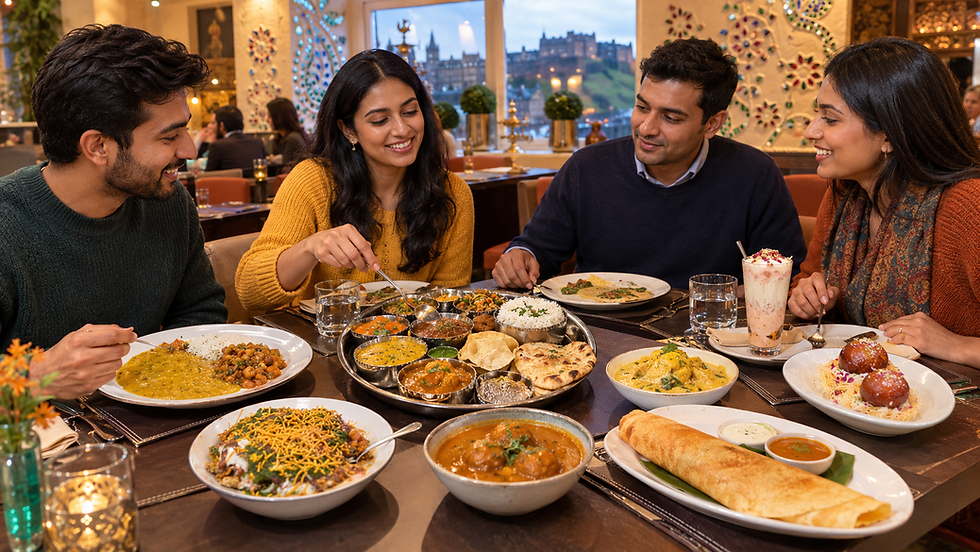
Dosa has become an increasingly popular choice among Edinburgh diners exploring Indian food beyond the more familiar curry and rice combinations. Its naturally vegan base and lighter cooking method make it a strong fit for the city's growing appetite for plant-based eating in Scotland, offering something that feels genuinely different from a typical night out while still being deeply comforting.
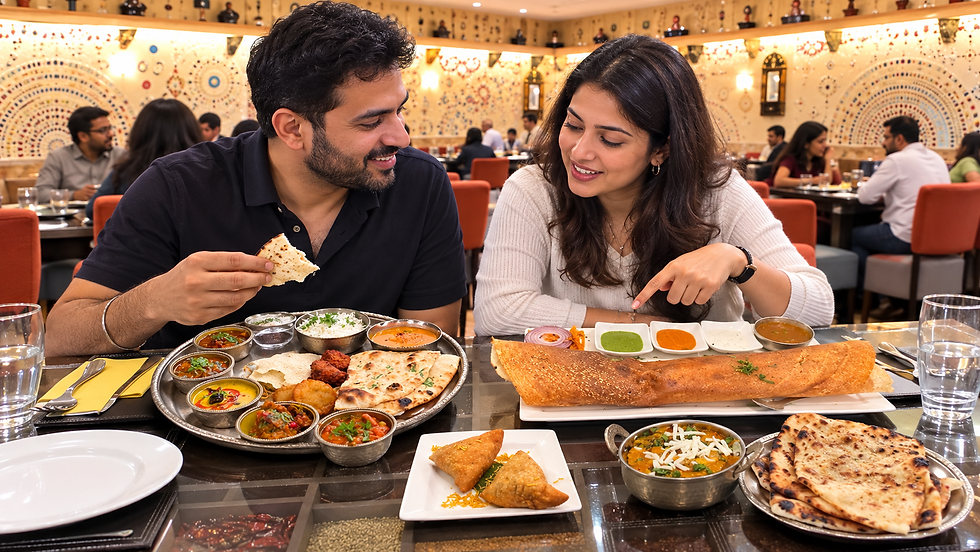
Dosa has remained one of our most consistently ordered dishes since 1975, prepared fresh with properly fermented batter rather than a rushed, same-day mix that skips the very process that gives dosa its flavour and texture. You'll find us on St Patrick Square in Newington, where it has been part of the menu from the beginning.
Tips for Ordering and Enjoying Dosa
Start with a plain or masala dosa if it's your first time, since these are the most classic, approachable introductions to the dish.
Don't skip the sambar. It's designed to be eaten alongside the dosa, not as an afterthought, and adds essential moisture and flavour.
Eat it while it's hot. Dosa is at its best straight off the griddle, when the exterior is still at its crispest.
Ask about spice levels, particularly with Mysore-style versions, if you're not sure how much heat you can handle.
Explore beyond the classic. If you enjoy your first dosa, trying a rava or set dosa on a future visit is a great way to experience the range within the category.
Frequently Asked Questions
Q. What exactly is a dosa?
A. A dosa is a thin, crisp South Indian crepe made from a fermented batter of rice and lentils, typically served with sambar and chutney.
Q. Is dosa vegan?
A. Yes, traditional dosa batter is naturally vegan, though it's worth checking whether ghee is used on the griddle and whether any filling or chutney contains dairy.
Q. What are the different types of dosa?
A. Common types include plain dosa, masala dosa, rava dosa, paper dosa, Mysore masala dosa and set dosa, each varying in thickness, crispness and filling.
Q. What's the difference between dosa and uttapam?
A. Dosa is spread thin and cooked until crisp, with fillings added after cooking, while uttapam uses a thicker batter with toppings mixed in before cooking, giving it a softer, pancake-like texture.
Q. How is dosa batter made?
A. Dosa batter is made by soaking and grinding rice and urad dal separately, combining them, and fermenting the mixture overnight before cooking on a hot griddle.
Q. What sauces come with dosa?
A. Dosa is traditionally served with sambar, a lentil and vegetable soup, alongside chutneys such as coconut, tomato or mint.
Q. Is dosa healthy?
A. Dosa is generally a balanced choice, particularly when plain or lightly filled and cooked with minimal oil, thanks to its fermented batter and mix of carbohydrates and plant-based protein.
Q. Where can I try an authentic dosa in Edinburgh?
A. Kalpna has served traditionally prepared dosa as part of its vegetarian and vegan menu since 1975, using properly fermented batter cooked fresh to order.
Final Thoughts
Dosa has earned its place as one of the most loved dishes in Indian cuisine for good reason. It's naturally vegan, genuinely versatile, and, when made properly with well-fermented batter and a hot griddle, it delivers a texture and flavour that's hard to replicate with shortcuts. Whether you stick with a classic masala dosa or branch out to a rava or set dosa, it's a dish worth getting to know properly rather than ordering once and moving on.
If you're ready to try dosa made the traditional way, explore our dosa options and full menu or book a table and taste the difference proper fermentation makes.

Comments